




Student charter
This charter was written by Trust staff and student representatives to help you understand our vision and the ethos of the education and training we provide
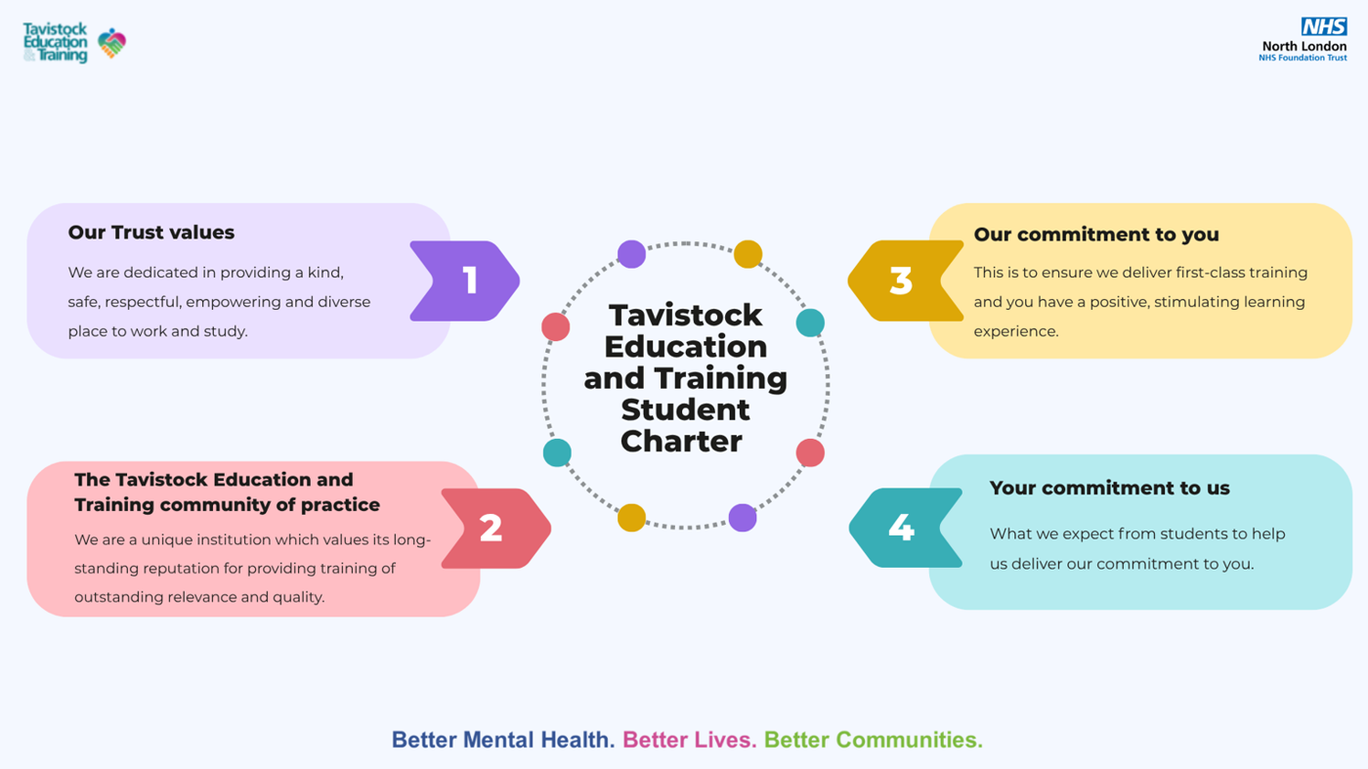
This Student Charter sets out the shared expectations, values and principles that underpin our learning community at Tavistock Education and Training. It outlines the commitments and responsibilities that foster a respectful and collaborative learning environment.
Tavistock Education and Training is a proud community of diverse students and staff, coming from clinical, social work, nursing, teaching and many other professions. We all have a common goal: to learn and grow together so that we can make a difference in our chosen fields. We want to empower one another and work together in partnership to encourage the exchange of ideas, observations and experience.
Our Trust values
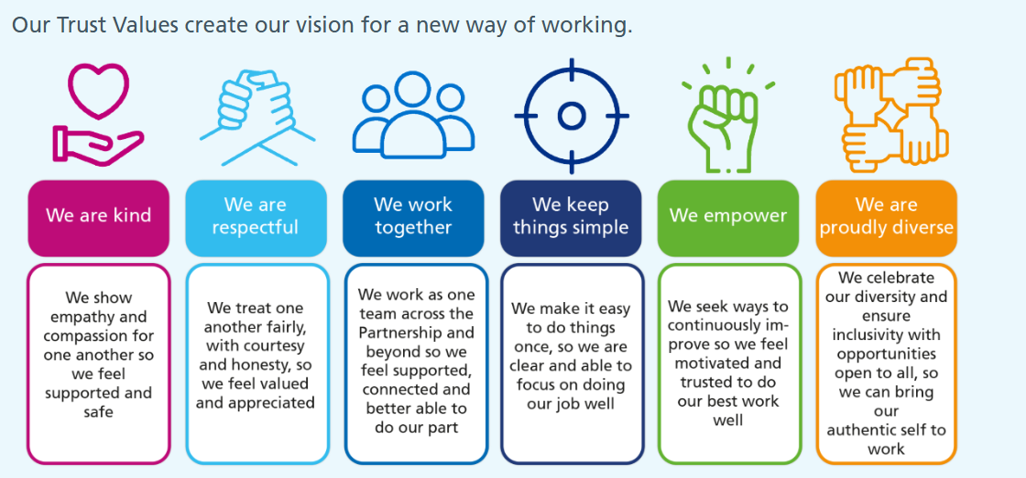
Our Trust Values and Behaviours Framework outlines expectations of our ourselves and each other and helps shape everything we do.
The Tavistock Education and Training community of practice
We are committed to delivering high quality, professionally relevant training that fosters critical self-reflection, experiential learning, and collaborative peer group learning. Our programmes are designed to cultivate confident, competent, and resilient students. The approach to learning and teaching requires students to develop deep knowledge of their discipline’s theoretical foundations, while cultivating a commitment to continual enquiry and professional development.
Students are expected to uphold freedom of thought and expression, while maintaining respect for the rights and dignity of all within their learning environment. We are committed to high academic standards, reviewing these annually and valuing the judgement of external examiners appointed by our awarding bodies.
We are firmly committed to equal opportunity for all students and staff, valuing and respecting diversity in all its forms, and actively sustaining an environment free from discrimination.
Our commitment to you
To ensure that we deliver first-class training and you have a positive learning experience that enhances your resilience, you can expect:
- a safe, respectful and inclusive learning environment where all students can participate fully and where diverse perspectives are welcomed and valued.
- a learning environment that protects freedom of thought and lawful expression within a culture of mutual respect.
- a learning environment that is challenging and leads to intellectual and personal growth.
- staff committed to supporting your learning, wellbeing and development, including consistent academic, administrative and wellbeing support, for all students.
- sector-leading, well-designed, contemporary training programmes that prepare you for current and future practice as leaders in your chosen discipline.
- clear, accurate and transparent information about your course of study, assessments, expectations and regulations, including clear, up-front information in marketing materials to enable applicants to make informed decisions.
- policies and procedures that are clear, fair, and readily accessible throughout the duration of study.
- fair and impartial assessment, with constructive and timely feedback to support your progress.
- access to library services (which has its own service charter), digital resources and the virtual learning environment to support your studies.
- support in understanding course content and guidance in overcoming challenges in understanding.
- reasonable adjustments, tailored to your individual learning needs, and handled sensitively.
- a clear system of academic and pastoral support including personal tutors, administration, academic tutors and research supervisors.
- opportunities for meaningful student feedback and engagement through surveys, committees and forums, and a clear and fair complaints process, which ensures all voices are heard and responded to.
- positive, respectful communication and collaboration between staff and students, including accessible opportunities to connect as a community.
Your commitment to us
To help us deliver our commitments to you, and to respect each other, you are expected
to:
- attend and fully participate in all scheduled teaching, including lectures, seminars, tutorials and small-group sessions, contributing to a respectful and effective learning environment.
- uphold equality of opportunity by contributing to an environment free from discrimination and that is fully inclusive and respectful of all backgrounds.
- engage actively with learning by completing required reading, undertaking private study and seeking clarification or guidance when needed.
- Remain open and curious, ready to be intellectually challenged.
- complete all assessments to the best of your ability and submit work by published deadlines.
- conduct yourself professionally and safely upholding the Trust’s ethical and clinical expectations, standards of behaviour and confidentiality requirements.
- access appropriate channels to discuss concerns relating to your course programme. Students can speak with staff directly or follow the Trusts formal procedures for appeals and complaints (processes that are designed to safeguard both individual students and the wider community).
- Look after your well-being and seek support where needed.
- communicate promptly with course administrators regarding essential absences and follow required procedures for approval, where necessary.
- use respectful language and behaviour, contributing to a culture of constructive, confidential and inclusive dialogue.
- inform us of any needs that may affect your learning, so that appropriate adjustments and support can be considered sensitively.
- make full use of available academic and pastoral support, including tutorials, supervision and feedback opportunities.
- participate as a responsible member of the learning community, showing curiosity, commitment and respect for others’ contributions.
Tavistock Education and Training operates a Student Code of Conduct and students are expected to adhere to the standards of behaviour which are set out in this document.
Last updated 7 September 2026