
CPD lecture bundle – Tavistock Trauma Service: external lectures on trauma summer 2026 (CPD45C)
Hear from a range of experts based in the UK and beyond in our summer 2026 trauma lecture series
This innovative series of lectures is organised by the Tavistock Trauma Service and is designed to reflect the clinical approach of the work whilst emphasising an adapted psychoanalytic approach with multi-modality and trauma-informed care.
We also use neurobiological and attachment theory to understand the impact of trauma. Our series will present a range of external speakers, each experts in the field, who will bring their own understanding of trauma via a presentation, followed by an audience question and answer session.
Who is this lecture series for?
It is for you if you are a professional working within the mental health field who have an interest in trauma. You may be a psychologist, psychiatrist, social worker, mental health nurse, support worker, counsellor or therapist.
Our talks will cover neurobiology, attachment theory and different psychoanalytic perspectives on trauma, including historical child sexual abuse.
Lecture series details
Lectures will take place at the following times:
Please note that the discussion panel event on 4th June will be a meeting format, not a webinar, and audience participation is encouraged. Hence this will not be recorded and only available live.
| Lecture | Date | Start time | End time | Will lecture be recorded* and available after the live event? |
|---|---|---|---|---|
| Lecture 1: Dreams and psychic change in the context of trauma | Thursday 7 May 2026 | 7pm | 8.30pm | Yes |
| Lecture 2: The dilemma of unmet need for complex trauma | Thursday 4 June 2026 | 7pm | 8.30pm | NO |
| Lecture 3: Psychoanalysis and the scotomizing of trauma – implications for safeguarding | Thursday 2 July 2026 | 7pm | 8.30pm | Yes |
*To enable access to the widest possible audience these lectures are planned to be delivered live, but remotely, as webinars. Where we are able, a recording will be made available to all booked delegates although we encourage live attendance wherever possible. Please see the details above to see if this lecture will be recorded and available after the live event.
These lectures will be delivered remotely using Zoom.
You will need a device with a microphone and camera together with a suitably fast internet connection. Although mobile devices and tablets can be used, we recommend the use of a laptop or desktop PC for the best experience. Some devices provided by employers may have restrictions in place. Please use this Zoom test link to check your set up before booking.
You will be sent the necessary login link about a week before the course start date. Should you have any concerns about the accessibility of remote delivery please contact us to discuss how we can best help you.
Three lectures make up this summer 2026 series:
Lecture 1: Dreams and psychic change in the context of trauma
Thursday 7 May 2026
This lecture will be recorded.
Lecturer: Dr Ali Cliffe
This lecture is taken from my doctoral research on ‘Dreams and Psychic Change in Child and Adolescent Psychoanalytic Psychotherapy.’ It begins with an overview of the history of the way we think about dreams before considering a contemporary perspective. Ali draws upon a range of disciplines including psychoanalytic and developmental perspectives, psychology, affective neuroscience, neuropsychoanalysis, and neurobiology. Ali’s lecture will focus on the elements of her research that link to trauma and the ways in which dream life is affected by trauma but also how dreams can facilitate healing.
Lecture 2: The dilemma of unmet need for complex trauma
Thursday 4 June 2026
Please note that this discussion panel event will be a meeting format, not a webinar, and audience participation is encouraged. Hence this will not be recorded and only available live.
Lecturer: Tavistock Trauma Service and panel of invited speakers
This will be a live online meeting to encourage audience engagement. A panel of clinical leads of trauma services in the NHS across the country, working in different ways and different modalities, will engage in conversation together and with the audience to consider their experience of growing unmet need in the context of reducing resources in the NHS. This will be a frank and honest discussion of the ethical and emotionally difficult positions facing those working in the trauma field.
It will therefore not be recorded to promote an experience of safety and collaboration.
Lecture 3: Psychoanalysis and the scotomizing of trauma – implications for safeguarding
Thursday 2 July 2026
This lecture will be recorded.
Lecturer: Dr. Phil Mollon
Safeguarding concerns external reality. Is this a problem for psychoanalysis? Might there be a tendency to idealise the psychoanalytic method, with its focus on current psychic reality and the transference of the psychodynamic template, whilst denigrating the traumatised patient and the historical determinants? We face the problem of how adequately to address both internal and external reality and their interaction. Current societal, psychological, and neurobiological perspectives recognise both the prevalence of childhood sexual abuse and the pervasive damage it causes, often creating chronic complex PTSD woven into the personality. This contrasts markedly with earlier periods of unawareness in society and in psychoanalysis. The shocking eruption of knowledge of CSA during the 1980s and onwards gave rise to the emergence of the false memory societies claiming false accusations based on Freud-influenced therapies. This mirrored movements at the time of Freud’s early work, with contemporaneous documents showing widespread reports of sexual abuse of children combined with scepticism about their veracity. Freud’s 1896 paper on hysteria is sophisticated and entirely compatible with our current understanding of trauma and memory, but he later repudiated his own findings. In addition to CSA, another prevalent trauma inflicted on children at that time was ‘castration’ and female genital mutilation to deter masturbation. Freud uncovered a scene of female circumcision in the free associations of his main patient, Emma Eckstein. This childhood trauma was replicated in certain ways by the later botched surgery by Freud’s colleague, Wilhelm Fliess. Freud blamed and denigrated Eckstein. Anna Freud censored some of the letters relating to this. Fliess was Freud’s main confidante, or selfobject (in Kohut’s terms). His son, the analyst Robert Fliess, accused Wilhelm of abusing him sexually and in other ways, and described him as suffering from an ‘ambulatory psychosis’. Freud’s professional and social isolation, combined with his relationship with Fliess, appears to have contributed to his abandonment of his sexual abuse theory of hysteria and his alternative focus on the oedipal conflict. Ferenczi’s work could be viewed as an attempt to reinstate the banished and foreclosed realm of trauma into psychoanalysis. Freud and others sought to suppress this. Ferenczi’s dream of a small, severed penis on a plate, just prior to beginning his analysis with Freud, has been portrayed (by Carlo Bonomi) as representing the lost clitoris of Emma Eckstein, the trauma scotomised by Freud’s turning a blind eye to exogenous abuse. Can psychoanalysis find a way to overcome resistances to perceptions of both internal and external shocking realities and also engage with other agencies and disciplines in the service of safeguarding?
Save £15 with a lecture series bundle
Lectures can be booked individually at £30 each or as a cost-saving bundle comprising the three summer 2026 series lectures at £75 – a saving of £15 compared to booking the lectures individually.
Lectures included in this series
-
 CPD certificate
Tavistock Trauma Service: external lectures on trauma summer 2026 lecture 1 (CPD45C)
-
CPD certificate
Tavistock Trauma Service: external lectures on trauma summer 2026 lecture 2 (CPD45C)
-
CPD certificate
Tavistock Trauma Service: external lectures on trauma summer 2026 lecture 3 (CPD45C)
Testimonials
Speakers
-
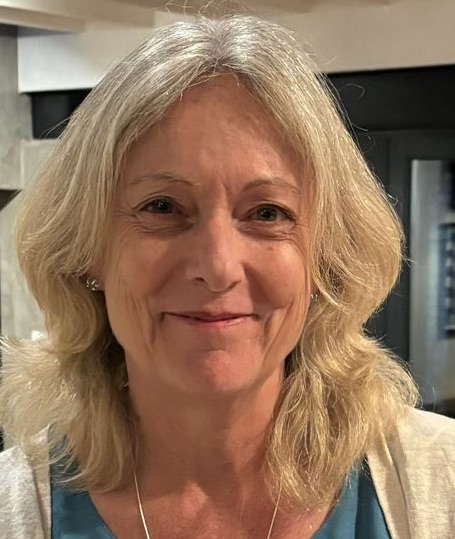
Joanne Stubley
Consultant Medical Psychotherapist and Psychoanalyst
-
Dr. Ali Cliffe
Child and Adolescent Psychoanalytic Psychotherapist
-
Dr Phil Mollon
Psychoanalyst, psychotherapist and clinical psychologist

You can book a place on this lecture series at any time using our MyTAP booking system. You’ll receive confirmation by email, and we will be in touch approximately one week before each lecture with detailed joining instructions. If you wish to attend only one or two of the lectures in this series, these can be booked individually in the ‘Lectures included in this series’ section above. Bookings will close 24hrs before the first lecture in the series.
Related courses

 Professional certificate
Complex Trauma: the Tavistock Model (D19)
CPD certificate 
Trauma-informed care: from theory to practice (DAB004)
CPD certificate 
Trauma, self-care and caring for others (DAA005)
CPD certificate