Social work conference: From performance culture to “good enough” practice
Social work conference explores what helps social workers stay relational
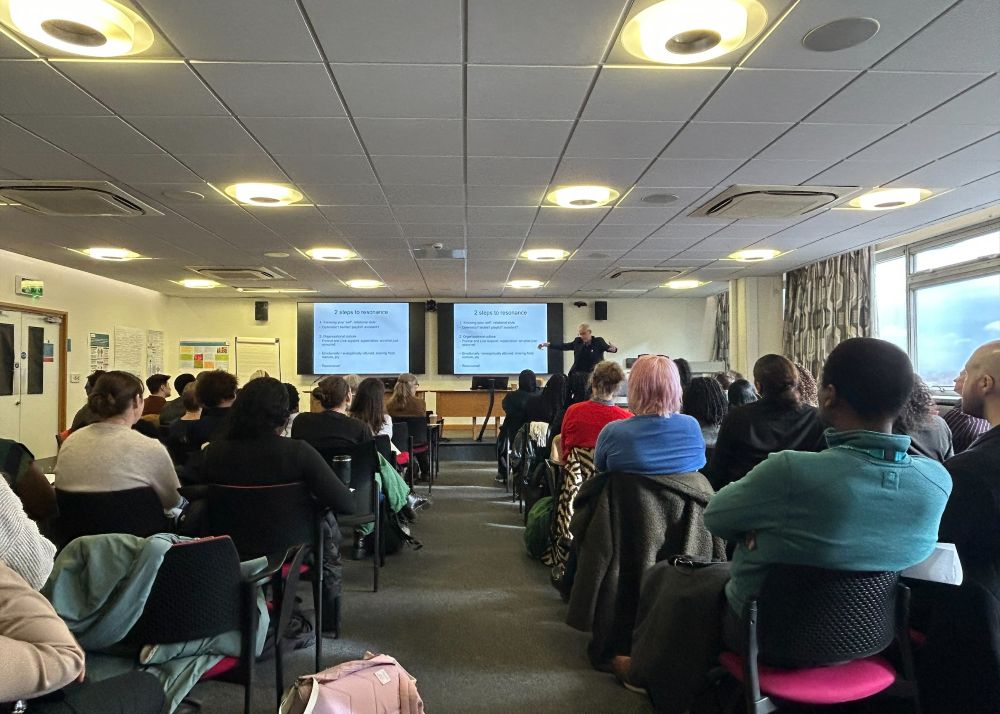
Professor Harry Ferguson urged services and practitioners to protect time and support supervision that explores the relational work that sits at the heart of effective practice.
He was speaking at the Tavistock and Portman’s recent Doctoral conference on social work and care this month, where scores of social workers, alumni, and students were in attendance. The conference included a showcase of poster presentations, and a range of workshops on research and social justice in social work and social care.
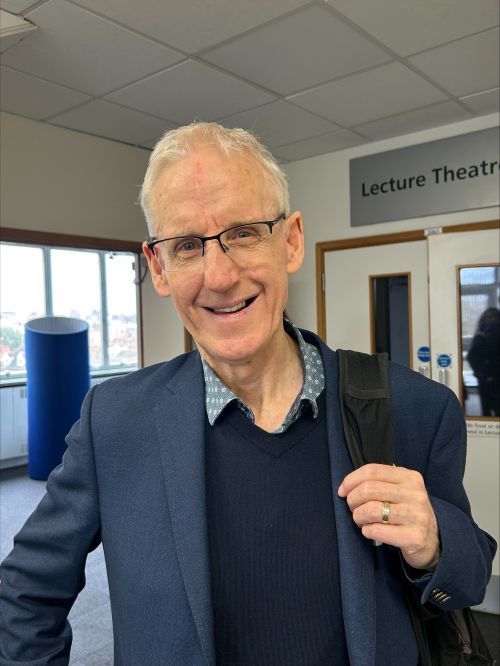
Harry, Emeritus Professor of Social Work at the University of Birmingham and a senior lecturer at the Tavistock and Portman NHS Foundation Trust, used real life case studies to explore how social work is often discussed through the lens of systems, processes and performance — but sometimes there is a “failure to drill down into what practice is really like” and what is happening in in the room, the car, the corridor and the family home.
He invited attendees to reflect on what makes practice feel “good enough” in the real world.
Describing how social workers are often operating under intense pressure, including scrutiny, anxiety about mistakes, and organisational demands that can leave little time for reflection, he argued that it becomes even more important to understand what helps professionals stay present and engaged in the work.
Drawing on 35 years of practice-near research, including shadowing social workers through everyday practice, Harry shared examples of what he called intimate practice: moments where children and families were not only spoken to, but meaningfully engaged, listened to and responded to. He said that “good enough” practice depends on an ability to connect, tolerate complexity and emotion, and to remain thoughtful even when the work feels uncomfortable.
“Being good enough requires connecting with your service, your expert, and the experience. Encounters like this where children are not only seen and listened to but held. This is my core argument. It requires closeness and interest. This is what I call intimate practice. And it takes energy and presence to be able to turn up,” he said.
He argued that the meaning of the work, and the conditions that protect staff from burnout, are closely linked to whether professionals have opportunities to experience relational connection, supported by a culture that makes it possible.
He emphasised the role of organisations in creating conditions that support the workforce to do humane, thoughtful work, and providing reflective spaces, peer support and what he called as “live supervision” to help workers process difficult encounters in real time, not only in formal supervision sessions.
The dilemma of assessing ‘good enough parenting’ in a racialised society
Dr Arlene P Weekes, Associate Professor at the Tavistock and Portman gave a keynote speech on the topic ‘Assessing ‘Good Enough Parenting’ isn’t easy in a racialised society: decolonising childcare practice’.
Arlene explored whether childcare practices in the UK can be decolonised, while exploring the ‘harm and disempowerment experienced by Global Majority mothers,’ (BGM) and the ‘Systematic neglect and emotional abuse at the hands of defensive social workers.’
She cautioned that social worker practice can be biased and engaged in defensive practices, often leading to punitive interventions rather than supportive ones, despite meeting the criteria for ‘good enough’ parenting.
Arlene said that Western centrism leads to the assumption that White women are good mothers, while Global majority mothers are viewed as deviant, which prevents meaningful understanding of diverse cultural parenting practices. She added that social workers appear not to have made efforts to understand the identities of BGM mothers, failing to adhere to their Professional Capabilities.
The emotional toll of Mental Capacity Assessments

The conference also heard from Dr Maddie Tait, one of our graduates, who shared her research exploring the emotional toll of conducting Mental Capacity Assessments (MCAs) and the support needed by practitioners on the ground.
Drawing on interviews with social workers across different settings and reflection on her own practice, Maddie described how practitioners can feel intense anxiety about “getting it wrong”. Participants in her research reported fear of judgement, fear of blame, and the weight of responsibility that can sit behind statutory decisions.
She argued that assessments are shaped by the interaction between the assessor and the person being assessed, including identities, power, privilege, and lived experience.
Maddie discussed how physical experience and sensory realities including pain, stress and visceral reactions such as disgust can influence what practitioners notice, how they interpret information, and how they experience their professional role in the room.
She also reflected on how service users observe and respond to practitioners, highlighting that the professional is not a neutral observer but part of the encounter.
Maddie argued that improving practice cannot rely on training alone. She said spaces are needed where practitioners can speak honestly about fear, power, uncertainty and emotional impact, while being supported to reflect, rather than simply endure.
Advanced practice and research
Our Professional Doctorate in Social Work and Social Care is designed for experienced practitioners working in complex health and social care settings. It supports students to undertake original, practice-near research while engaging in reflective and experiential learning, with the aim of strengthening leadership, supervision, and frontline practice across services.
You can learn more about our doctoral programme at upcoming course open events, or access thesis abstracts to explore the latest research by our graduates.